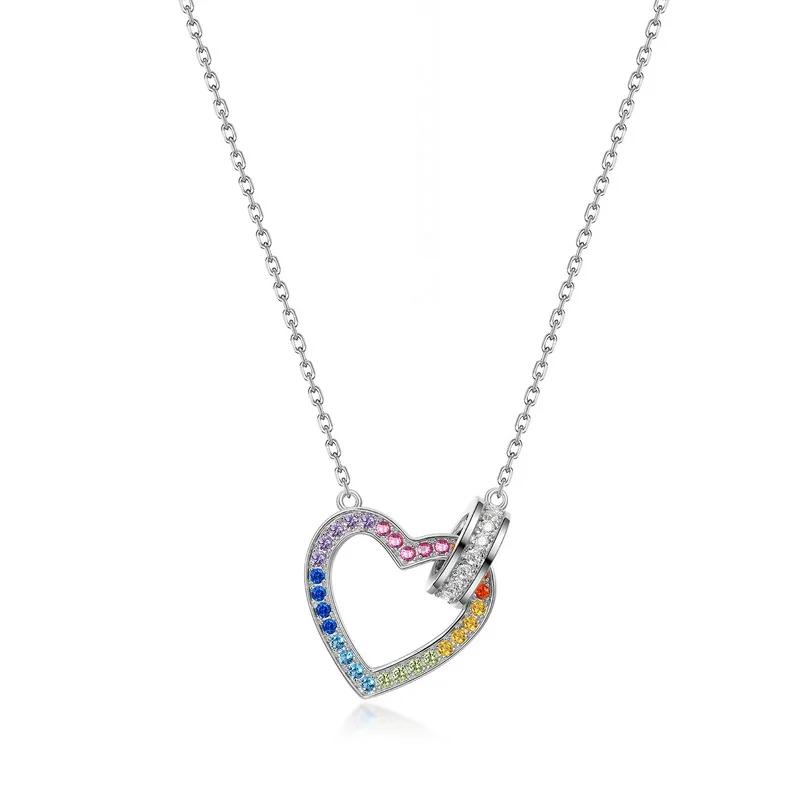
As the legendary French writer Antoine de Saint-Exupéry once wrote in The Little Prince, "It is only with the heart that one can see rightly; what is essential is invisible to the eye." In the realm of romance, this sentiment has never been more relevant than it is today.
.jpg?w=1376&h=768)
For decades, the wedding industry attempted to quantify love through carats and price tags, suggesting that the "essential" was very much visible—and very expensive. However, our 2026 consumer research into modern matrimony suggests a profound romantic renaissance: couples are moving away from the "value" of the stone and returning to the "heart" of the choice.
The Shift from "Prowess" to "Personality"
In our recent survey of 1,000 couples, a striking 65% of participants noted that they no longer view a ring as a display of financial status. Historically, a wedding ring was a "token of economic prowess". But as the Romantic poet Lord Byron once observed, "Love will find a way through paths where wolves fear to prey." Today, that "way" involves finding a piece that speaks to a couple's unique journey rather than their bank account balance.
The modern consumer is a "romantic realist." They recognize that while a diamond is traditional, it can often feel transactional. Our data shows that spending has shifted from the "three months' salary" myth to a more grounded 0.5 to 1 times the monthly income. By choosing with the heart rather than the wallet, couples are freeing themselves from financial anxiety, allowing the ring to remain a symbol of joy rather than a reminder of debt.
Materializing the Intangible: The Allure of the Unique
When we choose with the heart, we look for stories. This explains the meteoric rise of non-traditional gemstones like Opal. Unlike a standard round-cut diamond, which is graded on its lack of "flaws," an opal is celebrated for its unique "play-of-color"—a kaleidoscopic dance of light that is impossible to replicate.
The Jewelyking Solitaire Opal mentioned in our study serves as a perfect metaphor for this shift. Every opal is essentially a "fingerprint of nature." For a Gen Z or Millennial couple, the fact that no two stones are alike is infinitely more romantic than a high-clarity diamond that looks identical to a thousand others. It echoes the words of Ralph Waldo Emerson: "A friend may well be reckoned the masterpiece of nature." If your partner is your masterpiece, why should their ring be a mass-produced standard?
The Psychology of Choice: Why "Heart" Wins
From a research perspective, "choosing with heart" creates a stronger emotional bond with the object. When a customer selects a ring because the color reminds them of the ocean where they first met, or because the vintage gold-plating reflects their shared love for history, the ring transcends its material worth.
Our survey respondents frequently mentioned that "design" and "uniqueness" were their top priorities. They aren't looking for a brand name that carries a 300% markup. Instead, they are looking for a piece that matches their lifestyle and personal narrative. A minimalist, thoughtfully designed ring is more likely to be worn with pride for fifty years than a bulky, expensive "investment piece" that feels like a burden.
Reclaiming the Romantic Narrative
The great Romantic poet William Wordsworth spoke of "the spontaneous overflow of powerful feelings." A wedding ring should be the physical manifestation of that overflow.
Our 2026 report suggests three ways to ensure you are choosing with heart:
-
Ignore the Myths: Discard the "three months' salary" rule; it was a marketing invention, not a romantic one.
-
Seek Singularity: Look for stones like Opals that offer "unrepeatable" beauty.
-
Financial Peace: Choose a budget that allows you to focus on the marriage, not the payment plan.
Conclusion
In the end, the most romantic gesture isn't the one that costs the most—it’s the one that proves you truly know the person you are marrying. As our research proves, the value of a ring isn't found in the receipt, but in the "commemorative symbol" it represents.
When you look down at your hand in twenty years, you shouldn't see a dollar sign. You should see a choice made with heart—a choice that was, and always will be, more important than value.